
Walking into a new massage or wellness space can feel equal parts hopeful and a little uncertain. Whether you’re chasing relief from a sore shoulder, trying to decompress after a long week, or simply curious about what different treatments do, knowing how these operations work and what to look for will save you time and discomfort.
What people mean by a body rub site
The term is broad. For many, it refers to any business offering hands-on treatments—spas, therapeutic massage clinics, chair massage providers, and mobile therapists who come to your home.
Some places are clinically focused and tied to healthcare systems, while others prioritize relaxation and pampering. Because the phrase can carry different connotations, it helps to clarify whether a location advertises licensed therapeutic services or simply uses more ambiguous language.
How to find reputable places
Start with the basics: licensing, clear pricing, and visible professional affiliations. Search local regulatory boards for a therapist’s license and check online reviews that reference specific aspects of the visit—cleanliness, punctuality, and the therapist’s communication style.
Websites and booking platforms that include therapist bios, credentials, and transparent cancellation policies are usually a safer bet than listings that only show stock photos and vague descriptions.
Practical checklist before you book

Use a short checklist when comparing options. Look for: a posted license or registration number, detailed service descriptions, honest prices, and easy-to-find contact information. If a site or ad is cagey about what it offers, it’s worth moving on.
- License/credentials
- Clear pricing and duration
- Clean, professional storefront or studio photos
- Verified online reviews
- Plain, non-sexual service descriptions
These items help separate legitimate wellness businesses from those that operate in legal gray areas or prioritize other kinds of services.
Licensing and legal considerations
Regulations vary by state and municipality. In many U.S. jurisdictions, massage therapists must complete accredited training and pass a licensure exam. Some cities also require business permits and health inspections for massage establishments.
Before you go, check the local licensing board’s website. If a provider claims to be licensed but won’t provide a license number or professional association, that’s a red flag and a good reason to choose elsewhere.
What to expect on arrival
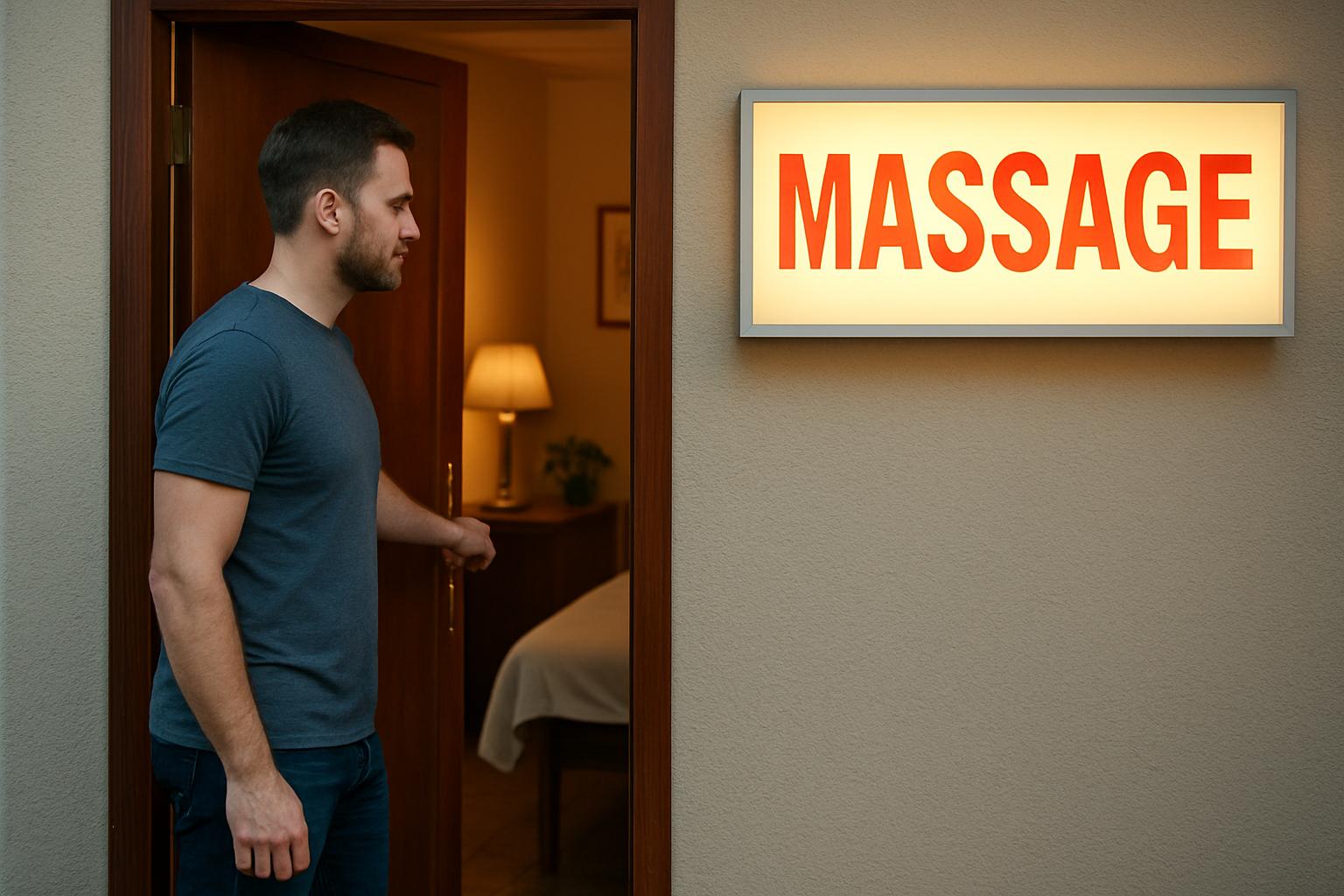
Most legitimate clinics will ask you to fill out a brief intake form covering medical history, current medications, and areas of pain. This isn’t intrusive—it’s necessary to ensure the therapist can tailor the session safely.
You’ll usually be given time to undress to your comfort level and to lie on the table under a drape. Professional therapists explain draping, consent, and any areas they plan to work on before starting the treatment.
Safety, boundaries, and consent
Therapeutic touch is a boundary-driven practice: draping, clear verbal consent, and the option to stop the session at any time are standard in reputable settings. Therapists trained in professional ethics will check in about pressure and comfort levels throughout the session.
If anyone suggests activities outside the posted scope of services, makes you uncomfortable, or ignores standard draping procedures, leave and report the business to local authorities. Your safety and comfort are non-negotiable.
Services and modalities you might encounter
Massage types vary by technique, pressure, and intended outcome. Some common options include Swedish for relaxation, deep tissue for chronic tension, sports massage for athletes, and chair massage for short sessions focused on shoulders and neck.
Many clinics also offer complementary services such as cupping, hot stone, and aromatherapy. If you have a specific goal—pain relief, improved mobility, or stress reduction—ask which modality is best suited for that outcome.
Quick comparison table of common modalities
| Modality | Pressure | Typical duration | Best for |
|---|---|---|---|
| Swedish | Light to medium | 30–90 minutes | General relaxation |
| Deep tissue | Firm | 30–90 minutes | Chronic muscle tension |
| Sports | Medium to firm | 30–90 minutes | Performance and recovery |
| Chair | Medium | 10–30 minutes | Quick relief in public or workplace settings |
Pricing and tipping expectations
Prices are highly regional. In many U.S. cities, a one-hour therapeutic massage usually ranges from about $60 to $150, depending on the therapist’s experience and the facility’s overhead. Specialty treatments and spa services can cost more.
Tipping is customary in the U.S. A 15–20% gratuity is common for good service, although some medical clinics discourage tipping and instead revise prices to be inclusive. If tipping is expected, it will typically be noted on the intake paperwork or posted signage.
Etiquette and clear communication
Good results hinge on communication. Before the session, tell the therapist about injuries, recent surgeries, or conditions like high blood pressure. During the session, speak up if pressure is too hard or if a technique causes sharp pain.
Be punctual and respectful of time—most therapists have tightly scheduled days. Cancel within the timeframe posted to avoid fees, and if you’re running late, call ahead so they can adjust your appointment without affecting other clients.
Red flags and warning signs
Several indicators suggest you should avoid a site: sexually suggestive language or images, insistence on cash-only payment without receipts, no posted license or professional information, and offers of “extra” services not listed on an official menu.
Also be cautious if staff refuse to disclose credentials, if the place feels unhygienic, or if the therapist asks you to remove draping in unusual ways. Trust your instincts; a professional setting will never pressure you to accept unsafe or uncomfortable practices.
Personal experience and practical tips
As a writer I’ve visited many clinics while researching health and wellness topics. I find the best experiences begin with a clear, friendly receptionist and a therapist who asks about goals before touching. One of my most useful discoveries was that small neighborhood clinics often provide more consistent results than flashy spas because they build long-term client-therapist relationships.
Another practical tip: keep a short notes file about what worked and what didn’t. Record the therapist’s name, pressure level, and any follow-up stretches. This helps you book the same provider again or instruct a new therapist quickly.
How to report concerns
If you encounter unethical or unsafe practices, report the business to local licensing boards, consumer protection agencies, or the Better Business Bureau. For immediate safety concerns, call local law enforcement. Document dates, times, and any communications you had with the business.
Online review platforms can help warn other customers, but provide factual details rather than inflammatory language to keep your account credible and useful.
Finding balance between relaxation and responsibility
Massage and hands-on therapies can be powerful tools for pain relief and stress management, but they aren’t a one-size-fits-all solution. Bringing realistic expectations and doing a little homework before you book will make the difference between a restorative visit and an awkward or potentially unsafe experience.
When you choose carefully, communicate clearly, and hold providers accountable to professional standards, you give yourself the best chance at a safe, effective session—where the focus stays squarely on health and well-being.