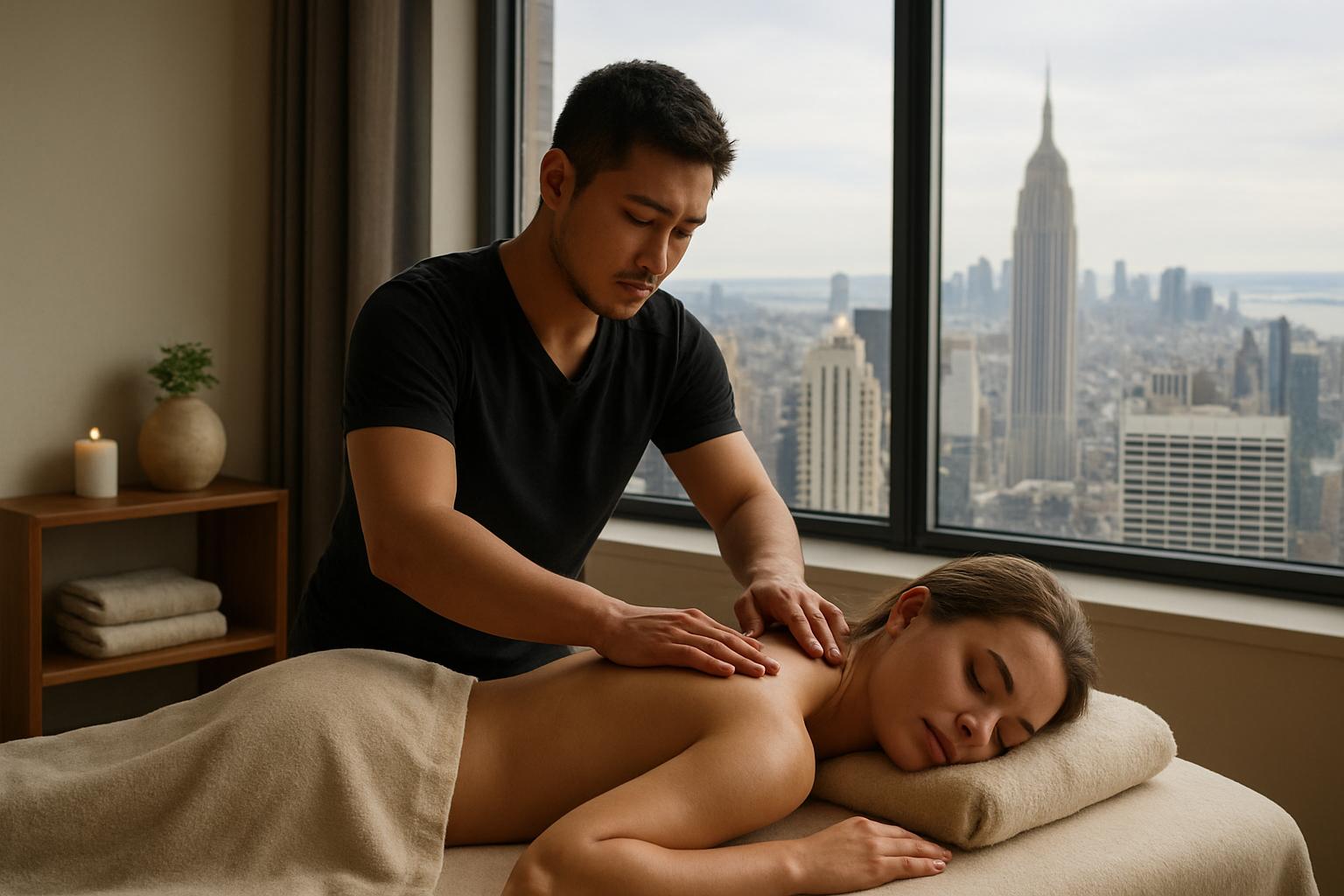

New York moves fast. Between subways, deadlines, and the constant hum of the city, finding a few hours to slow down can feel revolutionary. This guide walks through how to get the most from a massage in New York City—where to look, what to expect, and how to choose a therapist who actually helps you leave lighter and less tense.
Why choose a massage in New York City?
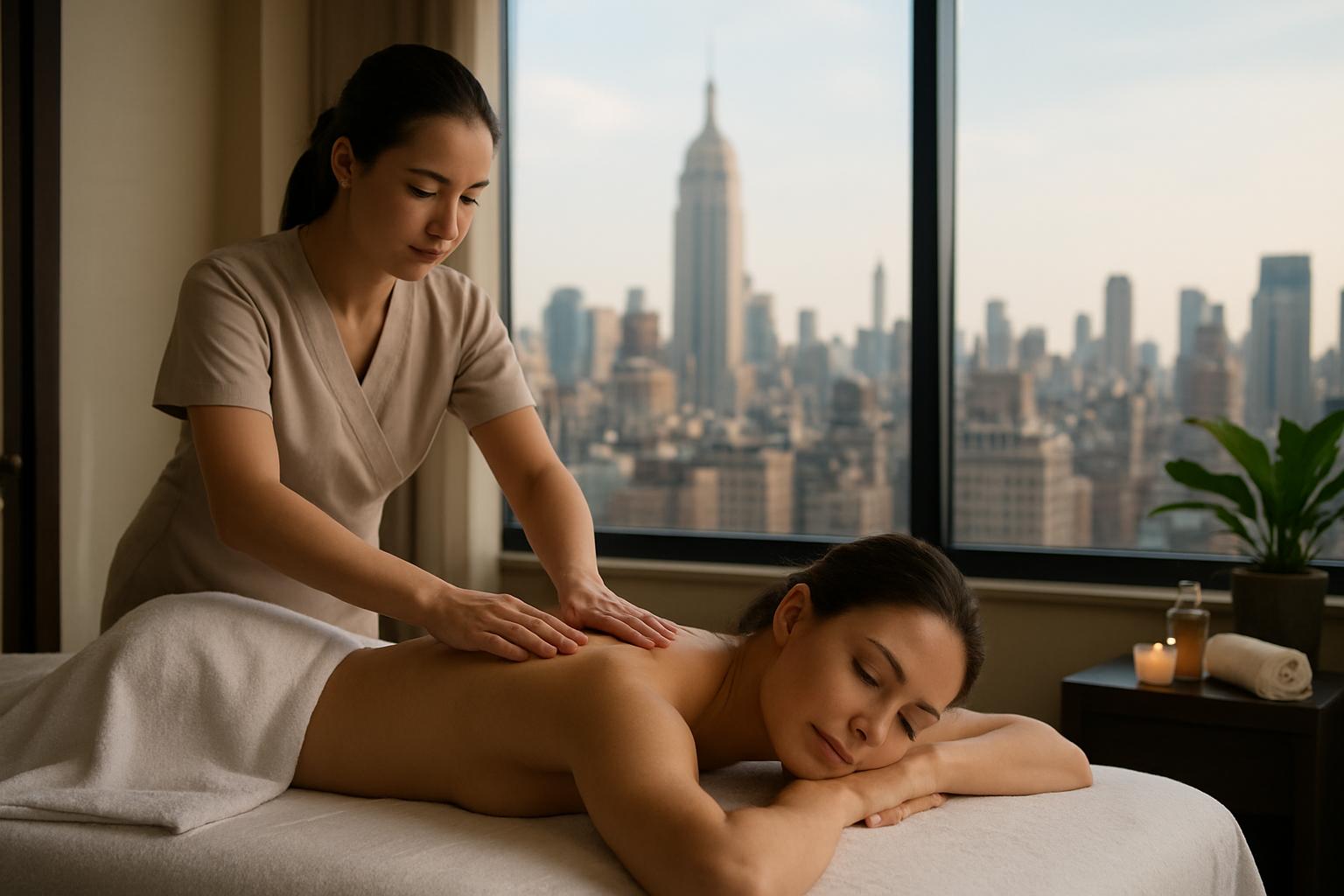
City life brings both opportunity and physical stress: long hours at a desk, shoulder tension from commuting, or standing on your feet for shifts. A well-targeted session can relieve pain, improve sleep, and reset your nervous system in ways a quick nap at home rarely does.
Beyond relief, the city’s diversity of modalities means you can find practically any kind of bodywork: clinical physical-therapy-style treatments, restorative spa sessions, or energetic work like reiki. That variety makes it easier to match a treatment to a specific need—athletic recovery, chronic pain, or simply deep relaxation.
How to choose the right therapist
Credentials and modalities
Look for licensed or certified practitioners. In New York State, massage therapists must meet specific education and testing requirements. Physical therapists, licensed acupuncturists, and chiropractors also offer bodywork that overlaps with traditional massage techniques.
Modalities matter. Swedish massage is gentle and circulatory, deep tissue targets chronic knots, myofascial release focuses on connective tissue, and sports massage prepares or repairs athletic bodies. Pick a modality that matches your goal, not just what sounds fancy.
What to ask before booking
Good therapists welcome questions. Ask about experience with your specific complaint, session length, what will be covered, and whether they accept your insurance or offer sliding scale rates. Clear communication helps avoid uncomfortable surprises on the table.
Here are quick questions to keep handy before you call or book online:
- How long have you worked with people who have my problem?
- Which techniques will you use and why?
- Is the session table-based, or do you include movement, stretching, or corrective exercises?
- What is your cancellation policy and do you offer packages?
Typical services and what they cost
Prices in New York vary widely based on neighborhood, clinic type, and therapist expertise. Expect to pay more in Midtown and upscale boutique spas than in community clinics or neighborhood studios. Duration also changes cost—30, 60, or 90 minutes are common options.
Below is a simple guide to typical ranges you’ll see around the city. These are averages to help set expectations, not fixed rates.
| Service | Common duration | Typical price range |
|---|---|---|
| Swedish / relaxation | 60 minutes | $70–$150 |
| Deep tissue / therapeutic | 60–90 minutes | $90–$180 |
| Sports / pre- or post-event | 60–90 minutes | $80–$170 |
| Medical massage / clinic | 30–60 minutes | $60–$140 |
Neighborhood recommendations: where to book
Manhattan
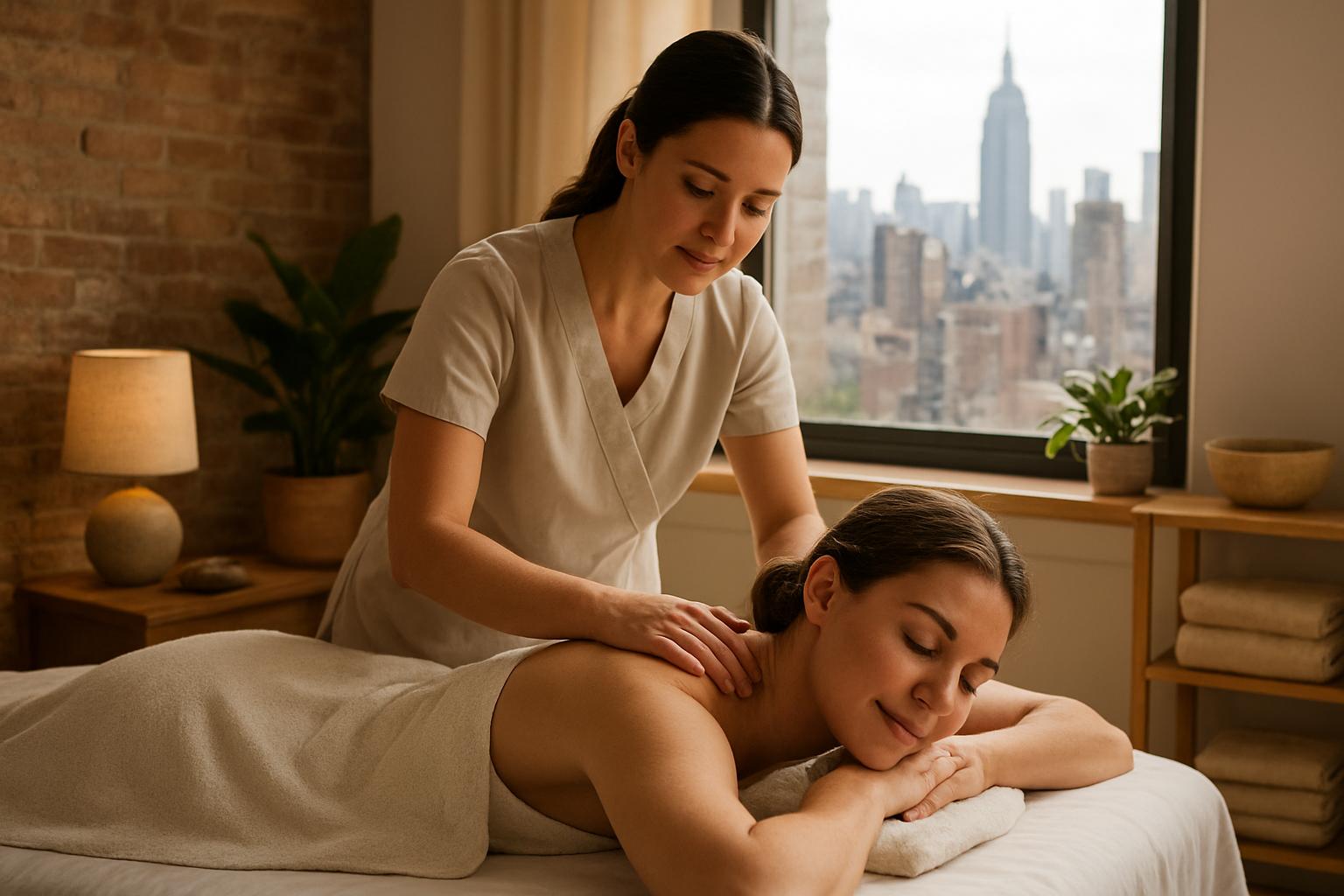
Manhattan leads with boutique spas and luxury hotels that offer opulent environments and add-ons like aromatherapy and hot stone. These are great for special occasions and deep relaxation, though they often charge premium prices.
For results-driven treatment, seek out small clinics near Union Square, the Flatiron District, or the East Village where experienced therapists focus on therapeutic outcomes rather than polish.
Brooklyn and Queens
Brooklyn’s scene blends artisanal charm with skilled practitioners. Williamsburg, DUMBO, and Park Slope have talented therapists who often combine modalities—think shiatsu, structural integration, and sports work in cozy studios.
Queens offers hidden gems, especially for affordable, high-quality sessions. Neighborhood clinics and independent therapists in Astoria and Jackson Heights provide solid work without Manhattan pricing.
What to expect during a session
Most sessions begin with a short intake: health history, current complaints, and what you hope to achieve. The therapist will explain draping, pressure levels, and any contraindications. Honest communication about pressure and pain ensures a safe, effective session.
Expect a mix of techniques tailored to your needs. A therapist might combine effleurage (long strokes), trigger-point release, stretching, and joint mobilization. Some include functional movement coaching so you leave with tools to prevent the same pain returning.
If you’ve never had bodywork, know that discomfort and progress are different. You might feel tender after a deep session—that can be normal—but sharp pain or numbness should always be reported and addressed immediately.
Practical etiquette: tipping, cancellations, and privacy
Tipping is customary in most private studios and spas. A good guideline is 15–20% of the service cost if you’re happy with the session. Some clinics or medical settings discourage tipping; check their policy before leaving extra cash.
Cancellation policies are strict in busy cities. Many places require 24–48 hours’ notice to avoid a fee. Save yourself hassle by noting policies when you book, and consider booking a recurring time slot if you plan to go regularly.
Therapists are bound by professional confidentiality. If you have privacy concerns—because of sensitive medical history or workplace proximity—ask about private rooms, soundproofing, and record-keeping practices in advance.
Self-care between visits
A massage is most effective when paired with at-home practices. Hydration, gentle stretching, and applying heat or cold as directed will extend the benefits. Even short daily mobility routines can prevent the return of tightness.
Pay attention to small lifestyle adjustments: a more ergonomic chair, a lumbar pillow, or a different backpack strap can make a dramatic difference. Therapists often suggest targeted exercises to maintain gains from a session.
How to read reviews and avoid pitfalls
Online reviews help but should be read with a critical eye. Look for detailed feedback about technique, cleanliness, and communication rather than blanket praise. Multiple mentions of a therapist’s ability to resolve a specific issue—like neck pain—are more useful than generic “amazing” comments.
Avoid places with inconsistent feedback about hygiene or professionalism. If a listing lacks clear contact info, licenses, or a visible cancellation policy, consider booking elsewhere. Trust your instincts: if communication feels off before you arrive, you’ll probably feel the same during the session.
My experience finding a consistent therapist
I used to bounce between spas, chasing short-lived relaxation. That changed when I prioritized a therapist with a background in orthopedic massage. After a candid intake, we mapped a realistic plan: weekly sessions for six weeks, then monthly maintenance.
Within a month my chronic shoulder pain eased. The difference wasn’t magical—sessions were focused, and I committed to daily mobility work. Booking a regular slot meant I didn’t skip, and the therapist adjusted techniques as progress occurred.
That consistency is the real trick. Finding one person who understands your body reduces guesswork and builds cumulative benefit over time.
Final thoughts before you book
Approach choosing a massage in the city like you would any important appointment: research, ask clear questions, and be intentional about your goals. Whether you need deep therapeutic work or a restorative escape, the right match can transform how you move and feel.
Start small if you’re unsure—try a 60-minute therapeutic or Swedish session, communicate openly, and decide after one or two visits whether to commit. With a little patience you’ll find someone who helps you navigate the city’s pace with less tension and more ease.